

IT Disaster Readiness & Recovery

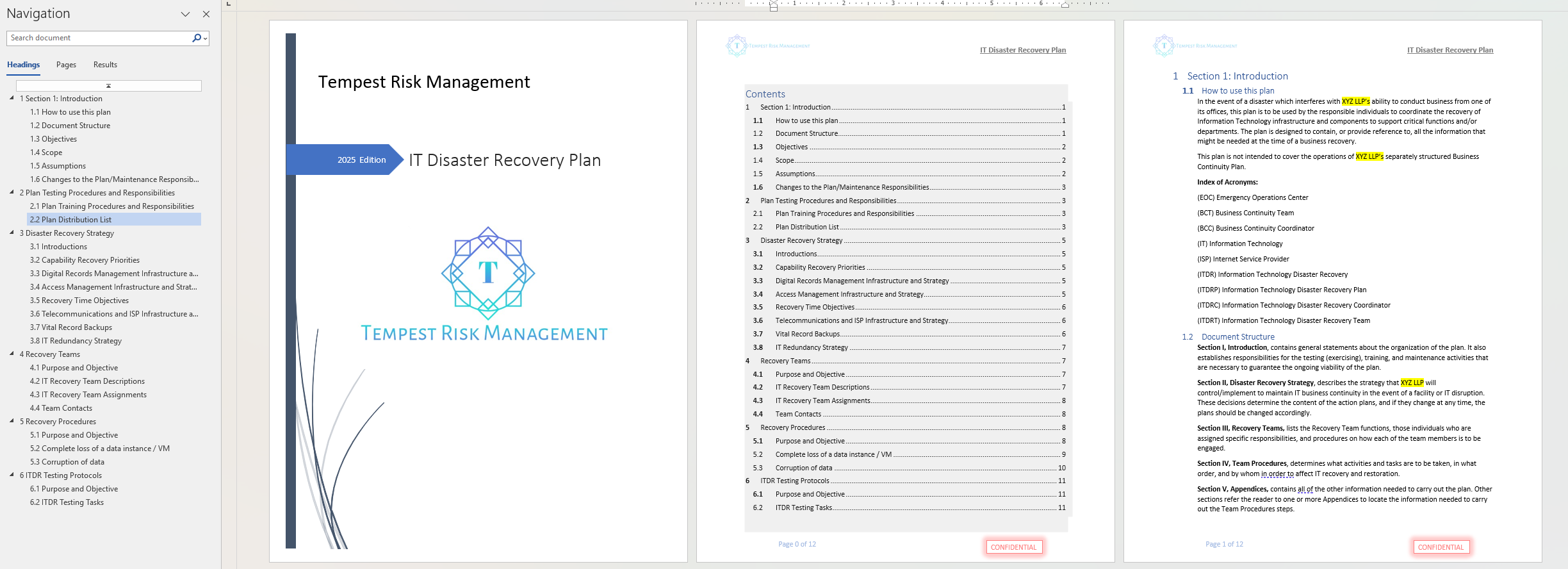
Tempest helps organizations assess their IT infrastructure, evaluate current disaster recovery capabilities, and build practical IT Disaster Recovery plans that can be executed when systems fail. We review your environment, backups, redundancies, and system dependencies, then develop a recovery strategy with step-by-step procedures to restore critical systems, data, and operations. Our ITDR work is commonly developed in conjunction with business continuity planning so technology recovery supports broader operational recovery.

Problems Addressed
-

No documented process for restoring critical IT systems after an outage
-

Unclear priorities for which systems, applications, and data must be restored first
-

Teams are unsure of roles, responsibilities, and escalation steps during a disruption
-

No tabletop or desktop exercises have been conducted to test recovery readiness.

How Tempest Helps
Tempest works with your organization to build a structured, realistic, and actionable IT Disaster Recovery capability by:
Assessing your current IT infrastructure, systems, and recovery dependencies
Reviewing existing disaster recovery capabilities, including backups, redundancies, failover options, and recovery resources
Identifying recovery gaps, weaknesses, and points of failure that could delay restoration
Prioritizing critical systems, applications, and data based on operational need
Developing an IT Disaster Recovery strategy aligned to your business continuity objectives
Creating step-by-step recovery procedures for critical systems and technology services
Defining roles, responsibilities, escalation paths, and recovery decision points
Facilitating tabletop or desktop exercises to validate recovery procedures and improve readiness
Our focus is on practical recovery planning—not overly technical documents that sit on a shelf, but plans your team can actually use during a disruption.
What’s Included in an ITDR Engagement?
Review of current infrastructure and recovery environment
Backup and redundancy capability assessment
Critical system and dependency identification
Recovery strategy development
Step-by-step recovery instructions and system restoration procedures
Defined recovery roles and communication pathways
Coordination points with your business continuity plan
Optional tabletop / desktop exercise to test plan usability
Benefits and Outcomes
-
Reduced exposure to cyber threats and data breaches
-
Improved ability to restore systems and data after an outage
-
Improved data protection and compliance
-
Stronger alignment between IT recovery and business continuity priorities
-
Greater confidence for leadership, IT teams, and operational stakeholders